


By Guya Scopas Bethuel
The United Nations has sounded a fresh alarm over the worsening security, political, and humanitarian situation in South Sudan, warning that renewed fighting and deepening political divisions are pushing the country further away from a peaceful transition.
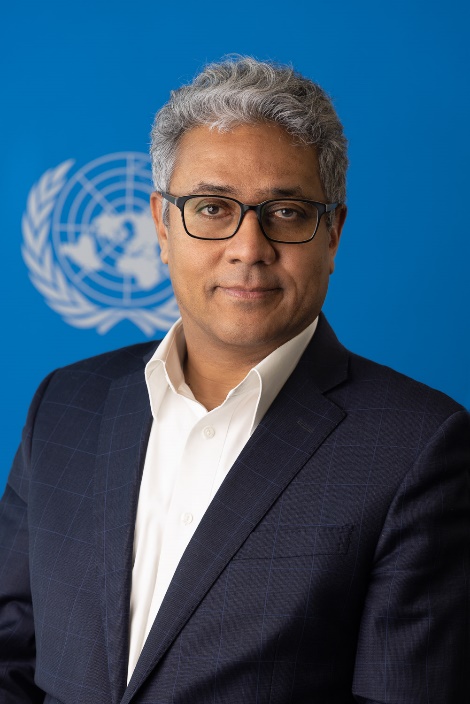
Briefing the African Union Peace and Security Council on Thursday, the Officer in Charge of the UN Mission in South Sudan (UNMISS) and Deputy Special Representative of the Secretary-General for Political Affairs, Mr. Graham Maitland, said ceasefire violations have become “systemic” since the Council was last briefed in October.
According to the UN, direct military confrontations between forces aligned with the main parties to the 2018 Revitalized Peace Agreement have been reported in eight out of South Sudan’s ten states, a sign, Maitland said, of a dangerous return to widespread conflict.
One of the most severe recent outbreaks of violence erupted on 29 December in Jonglei State, where clashes between the Sudan People’s Liberation Movement-In Opposition (SPLM-IO) and the South Sudan People’s Defense Forces (SSPDF) have displaced more than 180,000 people. Most of those forced from their homes are women, children, and the elderly.
Beyond displacement, Maitland told the Council that the human cost of the fighting is growing. Hundreds of civilians have reportedly been abducted, while cases of sexual violence have increased by 40 percent compared to 2024.
“This deterioration is not only military,” Maitland cautioned, “but also political.”
He expressed concern over recent political moves that appear aimed at altering key elements of the Revitalized Agreement, including efforts to separate elections from the constitution-making process and the national census. Such steps, he warned, risk weakening the authority of the 2018 peace deal over the transitional constitution a development that could further destabilize the country.
The UN official also pointed to rising political polarization following the ongoing trial of First Vice-President Riek Machar and seven others. In recent weeks, the last remaining SPLM-IO ministers were removed from the cabinet, and 11 opposition lawmakers were dismissed from the national parliament.
Maitland warned that attempts to amend national legislation without broad consensus among peace agreement signatories could inflame tensions and undermine the legitimacy of state institutions, with direct consequences for national security.
As violence and political uncertainty grow, the humanitarian outlook for 2026 is increasingly grim. The UN projects that conditions will sharply deteriorate due to escalating conflict, even as humanitarian funding for South Sudan has dropped by 40 percent. At the same time, the number of people in need of assistance has risen from nine million to 10 million.
In this context, Maitland urged armed actors to remove restrictions on humanitarian access and ensure the safety of aid workers so lifesaving assistance can reach affected communities.
International partners, he added, have voiced concern that unilateral decisions taken amid the current crisis are eroding confidence and ignoring repeated appeals from civil society and diplomatic actors.
Despite the setbacks, the UN reaffirmed that the Revitalized Agreement remains the only viable pathway to stability in South Sudan. Preserving it, Maitland said, will require renewed dialogue, political will, and genuine compromise among the country’s leaders.
He called on the African Union Peace and Security Council to press the parties to halt ongoing fighting, recommit to the Cessation of Hostilities Agreement, respect power-sharing and transitional security arrangements, and engage in inclusive, high-level dialogue to resolve the current political impasse.
Maitland also expressed hope that the upcoming African Union Heads of State Summit would help strengthen continental efforts to support peace in South Sudan.
“Completing a peaceful democratic transition is a shared goal between South Sudan and the international community,” he concluded. “But it is the South Sudanese themselves and first and foremost the authorities who must do the heavy lifting.”
The United Nations, he assured the Council, remains fully committed to its partnership with regional bodies and, above all, to the people of South Sudan.