


By Matik Kueth
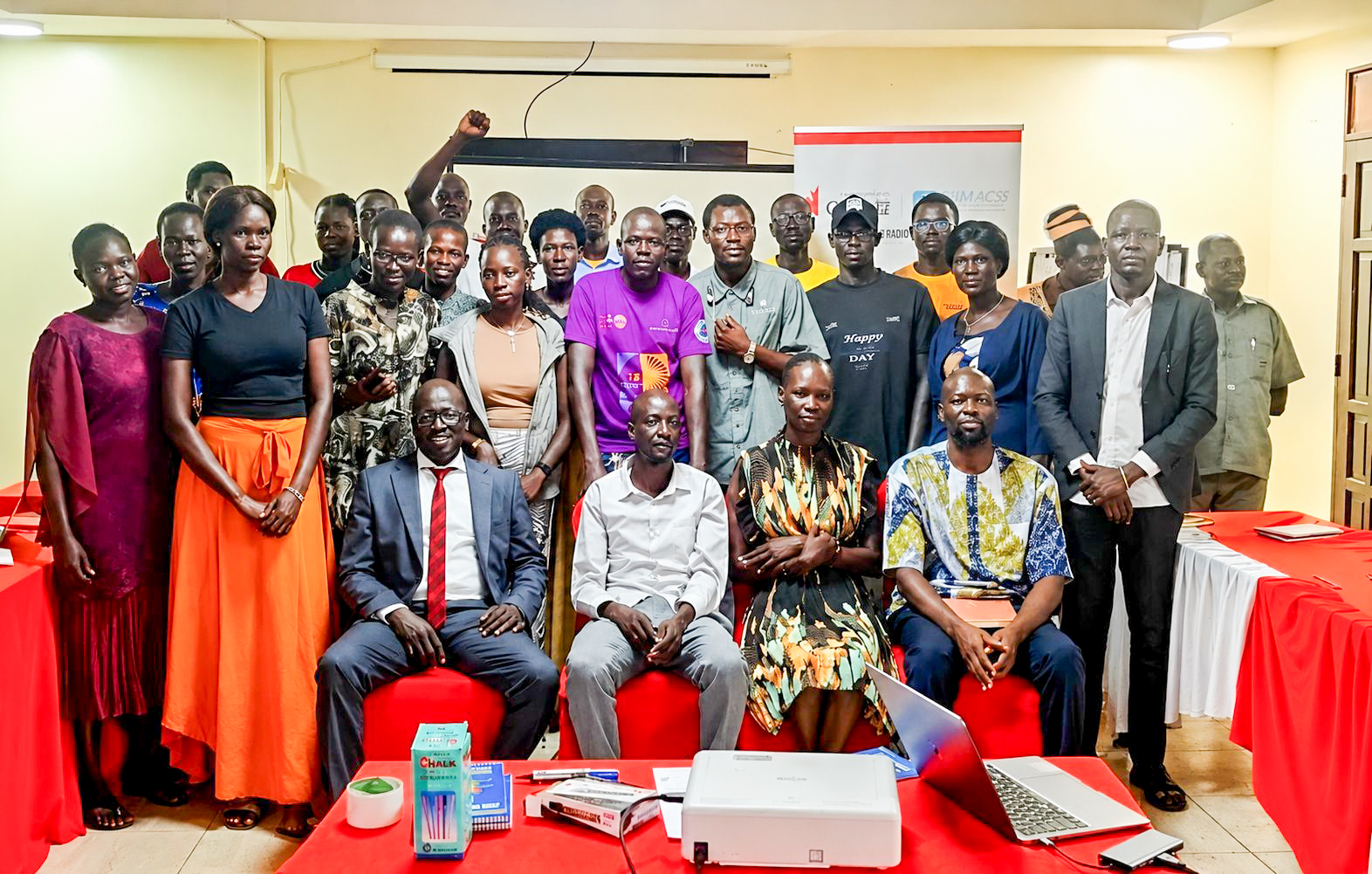
On Wednesday, the Association for Media Development in South Sudan (AMDISS), in collaboration with the Canadian Association of Midwives (CAM), held a community radio content design workshop in Bor town, Jonglei State, aimed at improving access to Sexual and Reproductive Health and Rights (SRHR) information for women, girls, and vulnerable communities in South Sudan.
The three-day training, funded by Global Affairs Canada and led by CAM, aims to improve community participation in health communication and promote access to accurate, evidence-based information.
The workshop brought together 35 participants, including 18 men and 17 women, drawn from radio listeners, health professionals, civil society organizations, the South Sudan Nurses and Midwives Association, and radio programme producers.
Speaking at the opening session, Dr. Simon Chathiech Wuol, Director-General for the Ministry of Health in Jonglei, said community involvement is essential to improving health outcomes.
He noted that many families, particularly in rural areas, continue to face challenges accessing reliable health information, making radio a vital tool for public education.
“The ideas generated during this workshop will help produce inclusive radio programmes that respond directly to the information needs of our communities,” he said.
Wuol stressed that empowering women and girls with health knowledge is critical to building resilient and gender-responsive health systems, while promoting awareness on maternal healthcare, family planning, adolescent health, nutrition and prevention of gender-based violence.
He lauded the Government of Canada for supporting efforts to strengthen healthcare systems in South Sudan and called on humanitarian and development partners to establish a specialized center for survivors of sexual and gender-based violence in Jonglei State.
Wuol noted that years of armed conflict, displacement, flooding, cattle-related violence and child abductions have affected healthcare delivery in the state, leaving many women and girls without adequate reproductive healthcare and psychosocial support.
Juma Peter Maya, AMDISS’s Advocacy and Communication Manager, stated that the project recognizes that lasting improvements in healthcare require informed communities that can make sound decisions about their health.
“This five-year TRUST Project is not only about improving healthcare services. It is about ensuring that women and girls have the information, confidence and support they need to make informed decisions about their health while strengthening the leadership of midwives who serve communities every day,” Maya said.
He said radio remains one of the most effective platforms for reaching millions of South Sudanese, especially those living in rural areas where access to digital information remains limited.
“Radio remains the most accessible source of information for millions of South Sudanese, particularly in rural areas where literacy levels are low and access to digital information is limited,” he stated.
He added, “When radio programmes are accurate, inclusive and culturally sensitive, they can save lives by encouraging people to seek timely healthcare, challenging harmful myths, promoting gender equality and strengthening public confidence in health services.”
Maya urged the participants to ensure that the programmes developed through the workshop reflect the experiences of women, men, adolescents and persons with disabilities in their communities.
“The programmes developed through this workshop should reflect the voices of the people. Communities understand their own challenges better than anyone else, and their experiences will help produce meaningful radio content that educates, inspires and encourages positive health behavior,” he stressed.
The workshop also highlighted the role of midwives in South Sudan’s health system, particularly in underserved communities where they often provide the first point of care for pregnant women, newborns and families.
Participants discussed community-centered radio programming, audience engagement, responsible health communication, combating misinformation, gender-sensitive reporting and developing health messages that respect local cultures while promoting evidence-based information.
The TRUST: Women’s Voices, Midwifery Leadership for Resilient Health Project is a five-year initiative running from 2025 to 2030.
It seeks to strengthen women’s and girls’ ability to exercise their Sexual and Reproductive Health and Rights, support midwifery leadership and increase community participation in health decision-making.
AMDISS further said a similar community radio content design workshop will be conducted in Torit, Eastern Equatoria State, as the initiative expands efforts to improve access to reliable health information across South Sudan.