


By Matik Kueth
As the world commemorated the International Day of International Criminal Justice, the Centre for Inclusive Governance, Peace and Justice (CIGPJ), in collaboration with Amnesty International, renewed calls for South Sudan to accelerate long-delayed transitional justice reforms, urging the government and the African Union to fast-track the establishment of the Hybrid Court for South Sudan and operationalize other accountability mechanisms to end impunity.
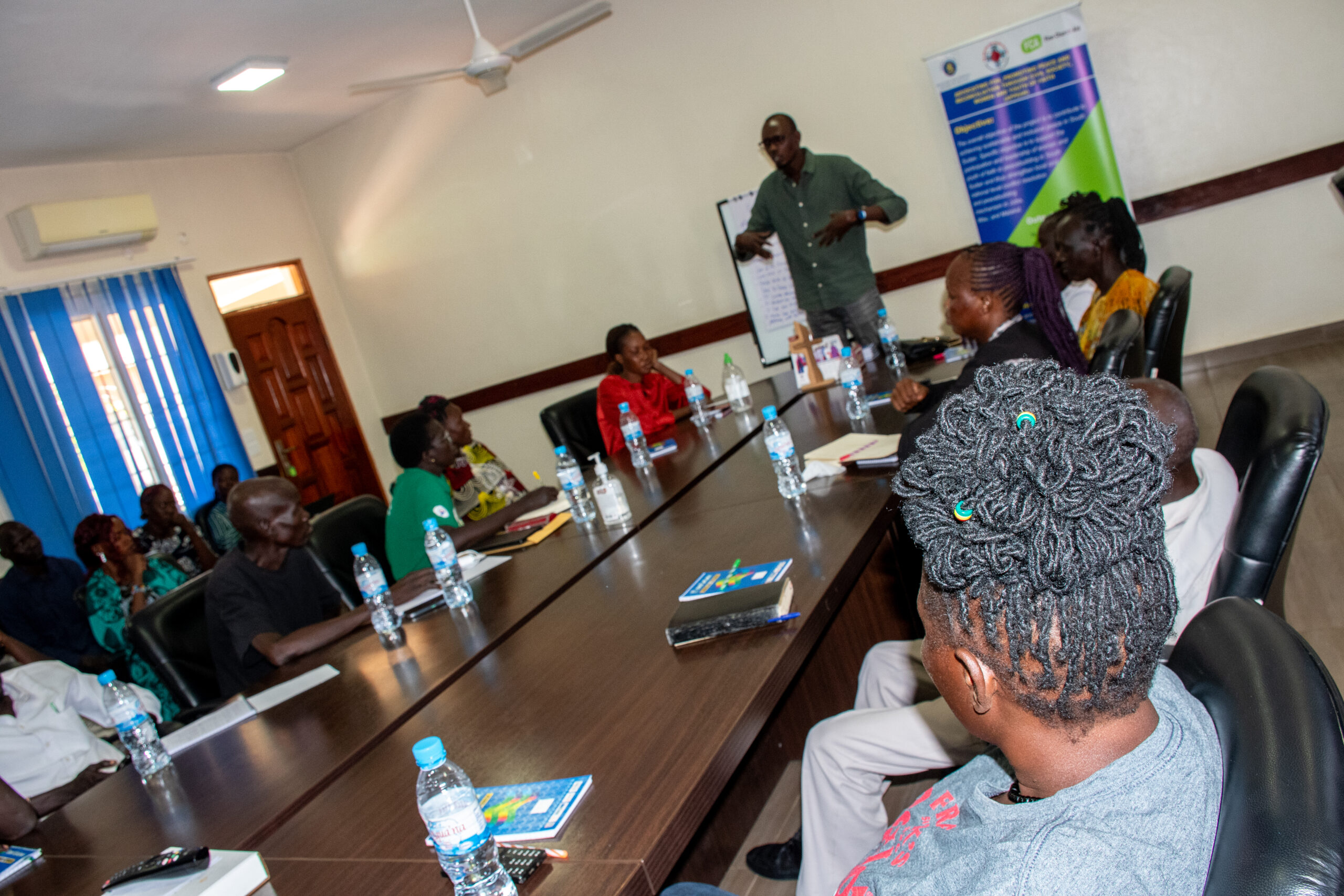
The call came during a dialogue held in Juba last Friday, which brought together survivors of conflict-related crimes, policymakers, civil society organizations, and human rights advocates to reflect on South Sudan’s transitional justice process and highlight the urgent need to deliver justice for victims.
Speaking to King Media, Jackline Nasiwa, CIGPJ’s Executive Director, said the International Day of International Criminal Justice serves as an important reminder of the global fight against impunity and the need to uphold justice for victims of serious human rights violations.
“This day is very important because we commemorate the day that the Rome Statute was signed. That was July 17th, 1998. And it was finally ratified on July 1st, 2002. So since then, the Rome Statute has become a very important international instrument in combating impunity and also addressing issues of international crimes of gross human rights violations,” Nasiwa said.
She added, “And as South Sudan, our conflict and our history is marred by crimes against humanity, which are crimes against international human rights and also humanitarian law. So, the Rome Statute, even if South Sudan has not ratified and it’s not a member state of the Rome Statute, still it’s part of the international community when it comes to international crimes and international human rights law.”
She noted that survivors from across the country used the event to share their experiences through dialogue and body-mapping exercises, revealing the lasting psychological and emotional impact of conflict.
“At the end, survivors called for justice and I think one of the survivors pointed at the need for the hybrid court to be established as part of the transitional justice mechanisms,” she stressed.
Nasiwa stated that the Hybrid Court should be established alongside the operationalization of the Commission for Truth, Reconciliation and Healing (CTRH) and the Compensation and Reparations Authority (CRA), stressing that the three mechanisms are designed to complement one another.
“Delay in justice has caused a lot. It has made people to take the law into their hands. It has led to lack of public confidence in the process. It has also led to hopelessness for victims who want to say that they get justice. It has also led to impunity because if no one is held accountable, everybody becomes entitled. We need accountability so that we can establish an accounting system and that we stop impunity and that everybody respects the rule of law,” she added.
Niki Frederick, Research Adviser at Amnesty International, said the organization remains committed to supporting South Sudan’s transitional justice reforms, particularly efforts to establish accountability mechanisms for survivors of conflict-related crimes.
“We have been engaging governments and regional institutions for over a decade, trying to convince them to establish mechanisms and reform systems that can one day deliver justice for survivors in South Sudan,” she stressed.
She noted that the slow pace of reforms should not discourage continued efforts to ensure justice and accountability for victims.
“It is a very steep hill to climb, but we are not giving up. Even if justice does not come tomorrow or next year, we must keep fighting for future generations,” she emphasized.
Malala John, National Coordinator of the Survivors Network of South Sudan (SUNSS), echoed the call, saying survivors want all three transitional justice mechanisms provided for under the 2018 Revitalized Peace Agreement to move forward together instead of leaving the Hybrid Court behind.
“For us as a survivors network in South Sudan, we call for the implementation for the three mechanism because it’s not meaning if the CTRH and CRA is already signed into law and they want to leave the hybrid court behind. they should go together,” she stated.
Malala said survivors believe the delay in establishing the Hybrid Court has slowed the country’s broader transitional justice agenda, calling on both the government and the African Union to work together to make the court a reality.
“The delay I think is from our side of the government because the CTRH and CRA will not be implemented without hybrid court because hybrid court will identify the root cause and what happened and what caused the war within the country,” she emphasized.
Members of the Survivors Network also shared personal accounts, saying justice remains essential for healing and lasting peace.
Mading (not his real name), underlined that survivors continue to look to the transitional justice mechanisms promised under the peace agreement as the only path toward accountability.
The bigger one that we, the survivors, we need is the hybrid court to be established,” he stressed, adding that the Truth Commission and Reparations Authority should also become operational.
He warned that the continued delay in establishing the court is allowing serious violations to continue without accountability.
Another survivor, Mary (not her real name), said justice means restoring victims’ rights and ensuring perpetrators are held accountable for crimes committed during the conflict.
“Justice means to get your rights. The perpetrators who are the problem-causers. They have to be punished according to the law,” she noted.
She urged the government and the public not to ignore survivors who continue to seek justice years after the violence.
“Their voice has to be heard. At least when they report their cases, they should not ignore, but they should take action,” she appealed.
Participants also called for increased psychosocial support for survivors, greater public awareness of the country’s transitional justice mechanisms and adequate funding for institutions responsible for implementing them.
The International Day of International Criminal Justice is observed annually on July 17th to commemorate the adoption of the Rome Statute in 1998, the treaty that established the International Criminal Court (ICC).
The day promotes accountability for genocide, crimes against humanity, war crimes and the crime of aggression while recognizing the rights of victims to truth, justice and reparations.