


By Matik Kueth
South Sudan has secured its first UNESCO World Heritage Site after the Boma–Badingilo Migratory Landscape was inscribed on the World Heritage List, marking international recognition of one of the world’s largest intact wildlife ecosystems and home to the planet’s biggest terrestrial mammal migration.
The decision was adopted during the 48th Session of the UNESCO World Heritage Committee in Busan, Republic of Korea, in a major milestone for the world’s youngest nation.
The UN cultural agency also added to the List of World Heritage in Danger, a move aimed at mobilizing international support, funding and conservation action to tackle growing threats including commercial poaching, habitat degradation and climate change.
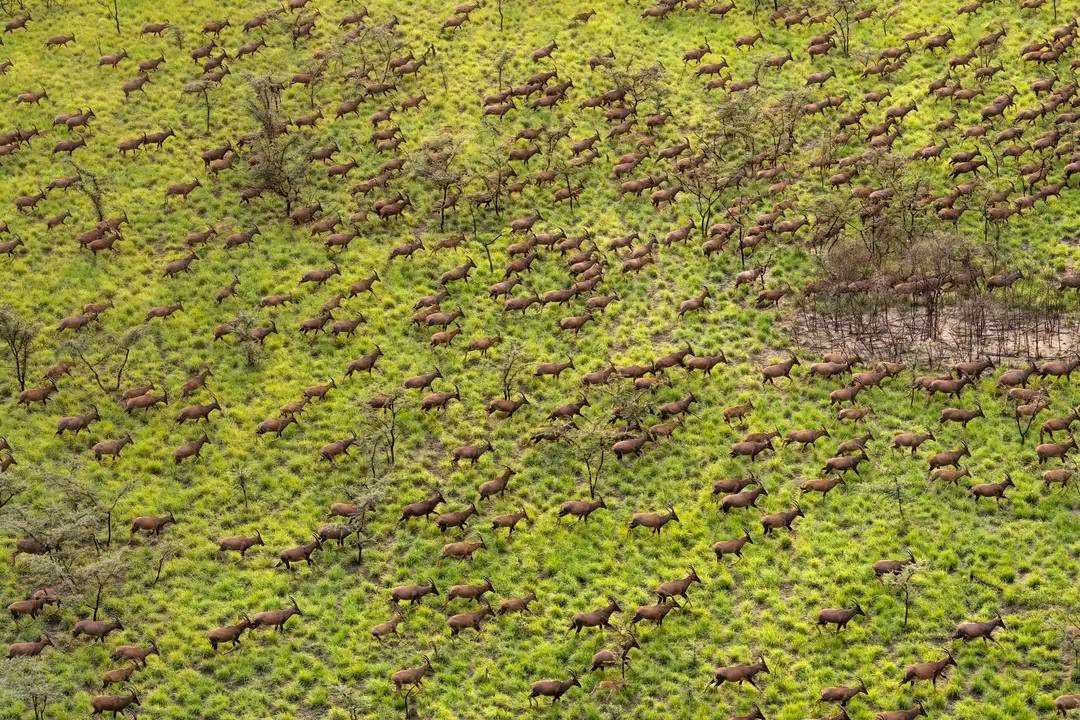
Stretching across Boma National Park, Badingilo National Park and the wildlife corridors linking them, the landscape spans about 12 million hectares of savannas, wetlands, floodplains and woodlands. It forms the core of the Great Nile Migration ecosystem, where an estimated six million white-eared kob, tiang antelope, Mongalla gazelles and other species undertake an annual migration driven by seasonal rainfall.
The inscription follows years of collaboration between the Ministry of Culture, Museums and National Heritage, the Ministry of Wildlife Conservation and Tourism, the South Sudan Wildlife Service, UNESCO, the International Union for Conservation of Nature (IUCN), African Parks and local communities.
In a statement issued on Sunday, Denay Jock Chagor, Minister of Wildlife Conservation and Tourism, described the recognition as a defining achievement for the country and its conservation efforts.
“Today’s inscription of the Boma–Badingilo Migratory Landscape as South Sudan’s first UNESCO World Heritage Site is a proud and historic moment for our nation. It is international recognition of the extraordinary natural heritage that South Sudan holds for the benefit of the world, and of our commitment to protecting it for future generations,” Chagor said.
He noted that the achievement reflected years of collaboration between government institutions, local communities, African Parks and conservation partners to protect one of the world’s most significant wildlife landscapes.
Sarah Nyanaath Elijah, Minister of Culture, Museums and National Heritage, stated that the listing represented international recognition of a landscape whose importance extends beyond South Sudan’s borders.
“The inscription of the Boma–Badingilo Migratory Landscape on the UNESCO World Heritage List marks a defining milestone in South Sudan’s history. As our country’s first World Heritage Site, it represents international recognition of a landscape whose value extends far beyond our borders and whose protection is a shared responsibility,” she stated.
Elijah said the recognition demonstrated South Sudan’s commitment to preserving both its natural and cultural heritage while ensuring that local communities remained central to conservation efforts.
Paulino Warnyang, a Community representative, stressed that the recognition acknowledged generations of people who have lived alongside wildlife in the Boma–Badingilo ecosystem.
“For generations our communities have lived alongside the wildlife and landscapes of Boma and Badingilo. This recognition honors not only the animals and the land, but also the people whose lives, traditions and cultures have always been connected to them,” he stated.
He expressed hope that the recognition would create new opportunities for local communities while safeguarding the landscape for future generations.
Peter Fearnhead, African Parks Chief Executive Officer, emphasized that World Heritage status would help attract international support to protect one of the few remaining natural systems of its scale.
“This is a proud day for South Sudan, and a substantive symbol of nation building in the world’s youngest country. There are very few landscapes left on Earth where a natural system of this scale still exists. World Heritage status will not safeguard the landscape on its own, but it does shine an international spotlight on its importance and helps build the support needed to secure its future,” he noted.
Since 2022, African Parks has managed Boma and Badingilo National Parks under a long-term partnership with the South Sudanese government, working with local communities to strengthen conservation, support livelihoods and protect cultural heritage.
The World Heritage listing recognizes the landscape’s outstanding universal value while underscoring the urgent need to safeguard one of Africa’s last intact ecological systems as development pressures, illegal wildlife exploitation and climate change continue to threaten its future