


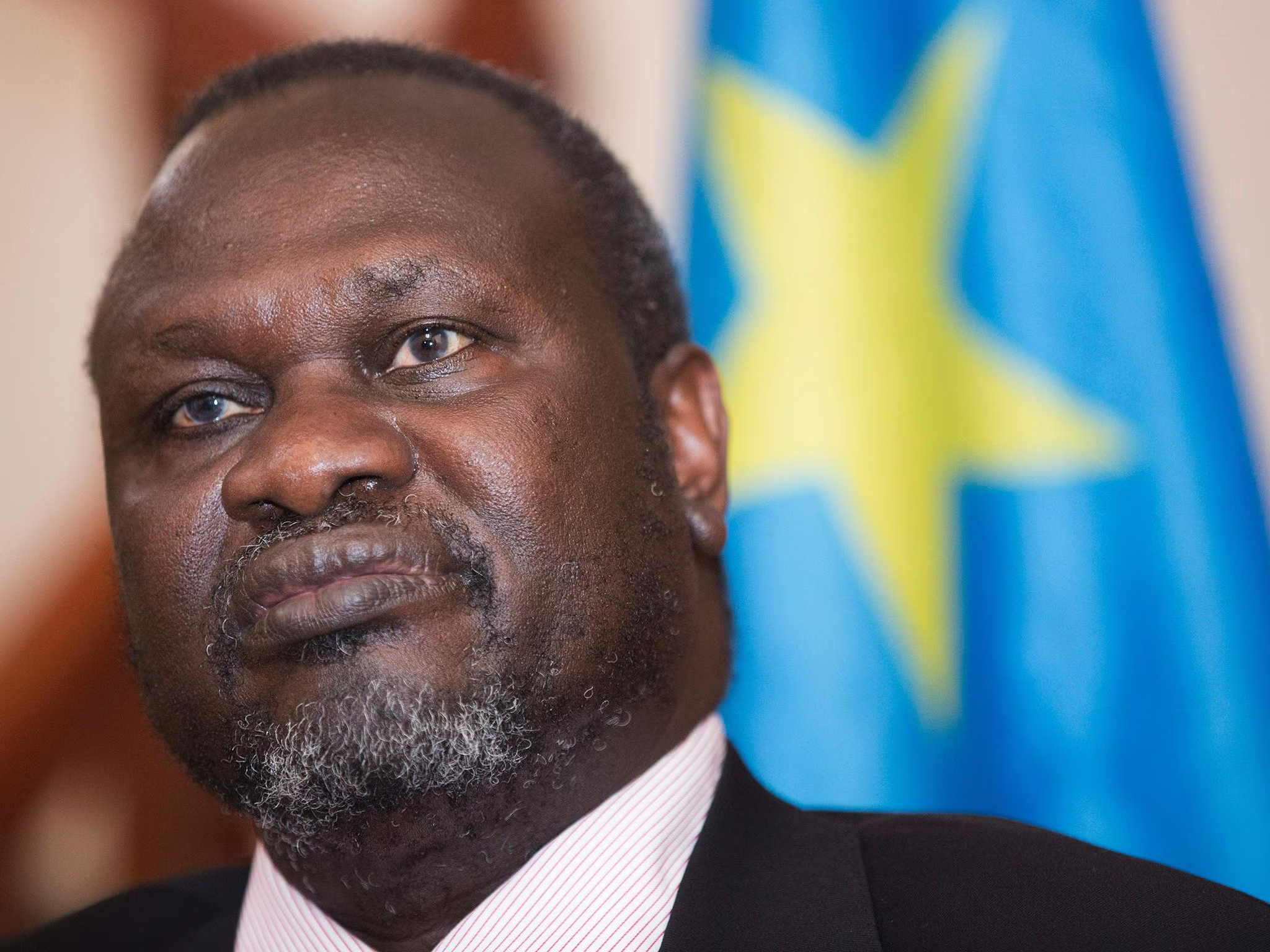
By Matik Kueth
The special court trying First Vice President Riek Machar on treason and war crimes charges heard explosive testimony Monday linking him directly to the mobilization of the White Army and the deadly March 2025 attacks on South Sudan People’s Defense Forces (SSPDF) bases in Nasir and Ulang, Upper Nile State.
Maj. Gen. Basilio Thomas Wani, the case’s lead investigator, testified during the trial’s 12th session that Machar personally authorized the white army that recruited and directed militia members who eventually overran government bases.
He alleged that Machar “set the stage for the violence” in his capacity as commander-in-chief of the Sudan People’s Liberation Army-in-Opposition (SPLA-IO), then failed to prevent the killing of surrendered SSPDF soldiers once the garrisons fell.
“The First Vice President neglected his duty to act despite having intelligence about the planned assaults,” Wani testified.
“He did not issue any orders to stop the attacks or protect surrendered troops and UN personnel,” he said.
The prosecutors presented a letter dated March 1, 2025, allegedly written by Machar, instructing county commissioners in Nasir and Ulang to form “local reception teams” composed of chiefs, SPLA-IO members, and youth to “receive SSPDF barges and safeguard their movement.”
Wani claimed those same teams later launched a coordinated assault on the Nasir garrison, seizing weapons and destroying property. The attack left scores of soldiers dead and several wounded.
After the garrison’s fall on March 7, he said, Machar persuaded the SSPDF commander, Gen. David Majur Dak, to surrender, but failed to prevent the execution of Gen. Dak and his bodyguards by White Army fighters.
Prosecutors alleged that Machar even communicated with local county officials and SPLA-IO commanders during UN evacuation operations, advising them to convince SSPDF officers to disarm before boarding UN helicopters, after which the militias allegedly took the weapons and killed the wounded.
Co-accused and the network of support
Machar, 75, and seven co-defendants face an array of charges, including treason, terrorism, crimes against humanity, mass murder, and destruction of property, in what observers describe as one of the most consequential trials in South Sudan’s history.
Among those accused are Gatwech Lam Puoch, accused of sharing intelligence and publicly defending the White Army’s mobilization, and Lt. Gen. Gabriel Duop Lam, SSPDF Deputy Chief of Defense Forces, accused of leaking classified information and discussing ammunition purchases with SPLA-IO field commanders.
Mam Pal Dhuor, alleged financier, accused of wiring over 700,000 shillings and birr to fund militia logistics, Camilo Gatmai Kel, an NSS officer, charged with facilitating the transfer of unlicensed weapons, Mading Yak Riek, radio operator, accused of leaking SSPDF troop movements, and Dominic Gatgok Riek, who allegedly circulated lists of SPLA-IO officers rewarded for their role in the Nasir assault.
The court also said that suspended Petroleum Minister Puot Kang Chuol, previously named in testimony, allegedly transferred $30,000 to fund the White Army mobilization ahead of the attack.
Defense pushback and court reactions
Machar’s lead counsel, Dr. Geri Raimondo Legge, repeatedly objected to the prosecution’s presentation, calling the testimony “prejudicial and speculative.” Most of his objections were dismissed by Presiding Judge James Alala Deng, who adjourned the hearing until Wednesday, October 22.
Judge Deng noted that the court has yet to establish the status of other accused persons who remain at large.
Machar, who has denied any involvement in the March violence, insists that rogue SPLA-IO elements and local militias acted independently and without his command.
What’s next
The court is expected to resume on Wednesday with the cross-examination of key witnesses and presentation of forensic evidence later this week.