


By William Madouk
When South Sudan walked into the basketball arena as a newly independent nation, few would have predicted that its name would soon be mentioned alongside Africa’s established basketball powers.
Yet, barely more than a decade after independence, the Bright Stars have become one of the continent’s most talked-about basketball teams.
Their rise has been swift, and increasingly difficult for opponents to ignore.
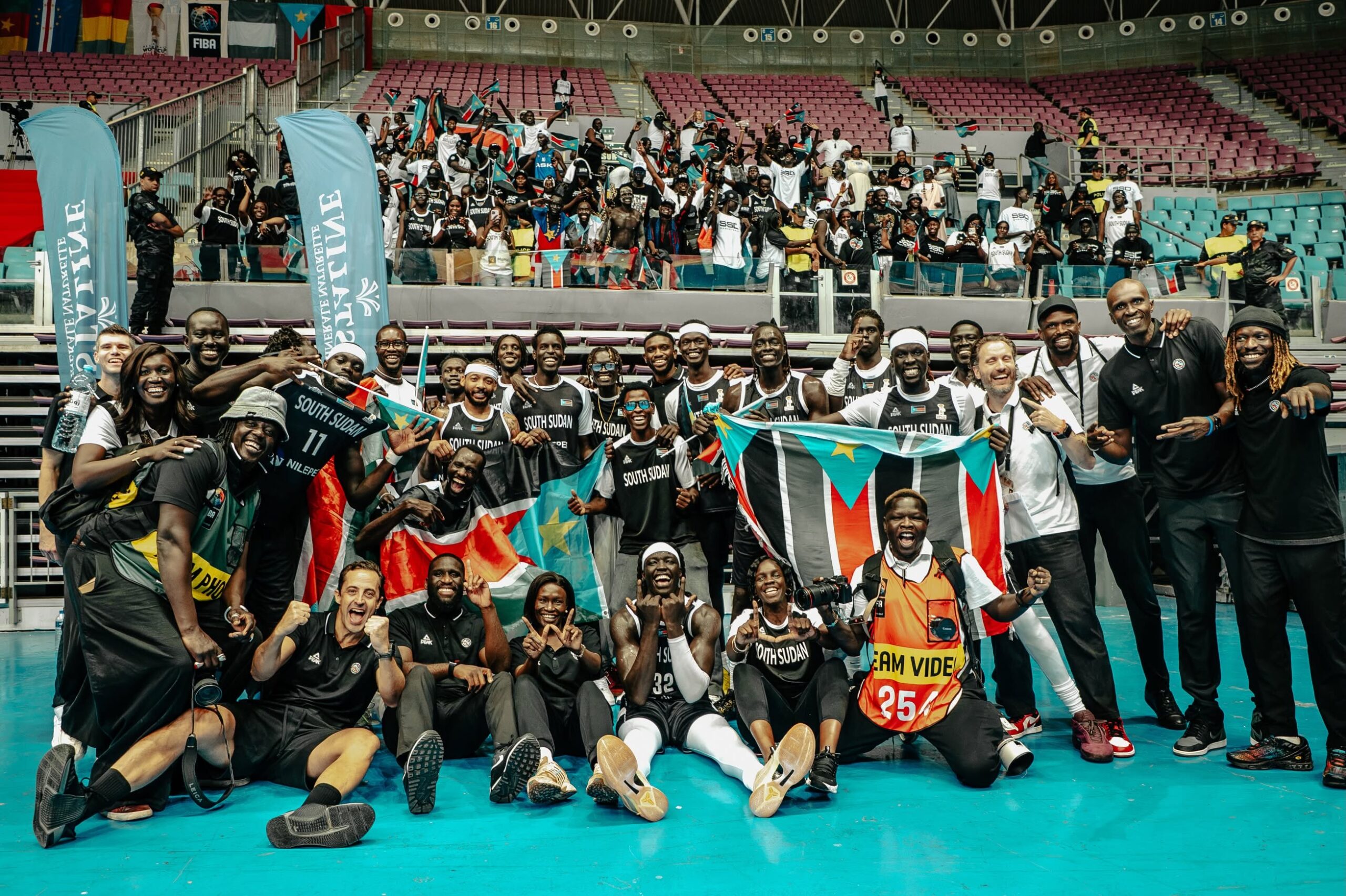
The latest evidence came in the FIBA Basketball World Cup 2027 African Qualifiers, where South Sudan produced a clean sweep, beating Guinea 81-71, Nigeria 82-79 and hosts Tunisia 79-75.
President of the South Sudan Basketball Federation, Former NBA star Luol Deng said South Sudan will be good at basketball for a long time.
The victories were important not only because of the points earned, but because of the opponents.
Nigeria and Tunisia are not newcomers to African basketball. Tunisia is among the continent’s established powers, while Nigeria has a long tradition of producing top-level basketball talent.
South Sudan, however, showed little regard for reputation. The Bright Stars played with the confidence of a team that believes it belongs at the top. And increasingly, the results are supporting that belief.
A remarkable rise
South Sudan’s basketball journey is one of the country’s most unexpected sporting success stories.
The national team began gaining international recognition in the early 2020s. In a remarkably short period, it progressed from an emerging side to a regular contender on the continental stage.
During the African qualifiers for the 2023 FIBA Basketball World Cup, South Sudan finished with an impressive 11-1 record.
The team then carried that form into the World Cup, where it defeated Angola 101-78.
Angola’s name carries considerable weight in African basketball. The country has won the FIBA AfroBasket title 11 times and has long been regarded as one of the continent’s leading basketball nations.
For South Sudan to defeat such an opponent by 23 points was more than a good result. It was a statement that the Bright Stars had arrived.
From the World Cup to the Olympics
The team’s progress continued. South Sudan qualified for the 2024 Paris Olympics, marking another milestone for a country whose basketball programme was still relatively young.
Before the Olympics, the team came within one point of beating the United States in an exhibition match in London. The Americans won 101-100, but the result attracted worldwide attention.
South Sudan had pushed one of the strongest basketball teams on the planet to the limit. At the Olympics, the Bright Stars went a step further.
They defeated Puerto Rico 90-79, recording South Sudan’s first Olympic basketball victory. For the players and supporters, it was a historic moment.
For international basketball observers, it was further evidence that South Sudan’s rise was not a temporary surprise.

Why are they so difficult to beat?
One explanation is the quality and experience of the players available to the national team.
South Sudan has benefited from a large basketball-playing diaspora, with many players developing their careers in professional leagues outside the country.
That experience has proved valuable.
Carlik Jones has become one of the team’s key players, while Wenyen Gabriel, Deng Adel, Tut Gach, Majok Deng and Mangok Mathiang have added experience, size and athleticism.
But the Bright Stars are not built around one player. Their strength is their ability to play collectively.
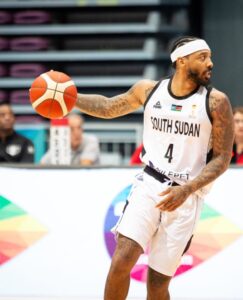
Carlik Jones said it’s more than basketball to represent his country, South Sudan.
They combine speed with size and have developed a reputation for effective outside shooting.
Their ability to stretch the floor creates space for attacking players while making it difficult for opponents to defend them.
Defensively, their athleticism allows them to pressure opponents and recover quickly. That combination has made the team increasingly difficult to contain.
Mental strength
Perhaps the most significant change has been psychological.
South Sudan no longer approaches major games as an underdog simply hoping to stay competitive. The players now expect to win.
That confidence was evident against Nigeria. Nigeria had the advantage at halftime, but South Sudan recovered and eventually secured a 82-79 victory.
In the closing moments, Nigeria had opportunities to level the game but missed two potential game-tying three-pointers.
South Sudan survived. Such moments are increasingly familiar to a team learning how to win close games.
Luol Deng’s influence
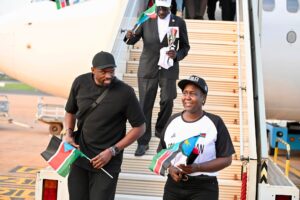
Former NBA star Luol Deng has played a central role in the development of South Sudanese basketball.
As president of the South Sudan Basketball Federation, Deng has helped drive efforts to build a national programme capable of competing at the highest level.
His involvement has also helped connect South Sudan’s basketball programme with players and professionals in the diaspora.
The strategy has been to build beyond the national team by developing a wider basketball structure.
That remains one of the biggest challenges. A successful national team can generate excitement, but sustainable success requires investment in the next generation.
Basketball as a source of pride
South Sudan has often struggled to present a positive image internationally, with news about the country frequently dominated by conflict, political disagreements, and humanitarian challenges.
Basketball has provided a different narrative; when the Bright Stars win, the country’s flag is displayed on an international stage.
South Sudanese supporters celebrate together, regardless of where they are in the world.
For a young country still developing its national identity, that symbolism matters.
The basketball court has become one of the places where South Sudan can project confidence, talent and ambition.
The challenge ahead
Success, however, brings new demands. South Sudan now needs to ensure that the progress of its national team is matched by investment at home.
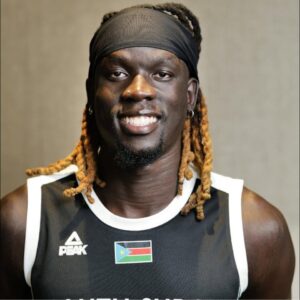
Captain Nuni Omot reiterates that more basketball courts are needed and youth development programmes must be strengthened.
Coaches require training, domestic competitions need greater support and Women’s basketball also requires investment.
Most importantly, young South Sudanese players need a pathway from school and grassroots basketball to professional competition.
Without that foundation, the country risks depending too heavily on players developed abroad.
A new force
South Sudan’s transformation has already changed the conversation around African basketball. Not long ago, the Bright Stars were largely unknown outside the continent.
Today, they are Olympic competitors, World Cup participants and genuine contenders against Africa’s established teams. Their victories over Nigeria and Tunisia are not isolated results.
They are part of a broader rise. The Bright Stars have earned the respect of opponents by repeatedly competing with — and beating — teams that once appeared beyond their reach.
For South Sudan, the journey is far from over. But the country’s basketball revolution has already achieved something significant.
The question is no longer whether the Bright Stars can compete with Africa’s best. They have proved they can.
The question now is whether South Sudan can build the structures necessary to ensure that this generation of Bright Stars is only the beginning.
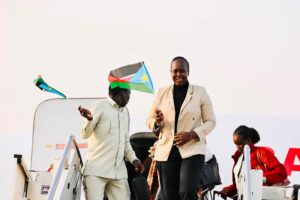
Atong Kuol Manyang Juuk, the Minister of Youth and Sports, lauded the team as the call for the development of sports facilities heightened.