


By Matik Kueth
The Intergovernmental Authority on Development (IGAD) has commended the participation of the South Sudanese government and public in the ongoing inter-party dialogue on preparations for the country’s planned elections, as the process faces questions over the exclusion of key opposition groups.
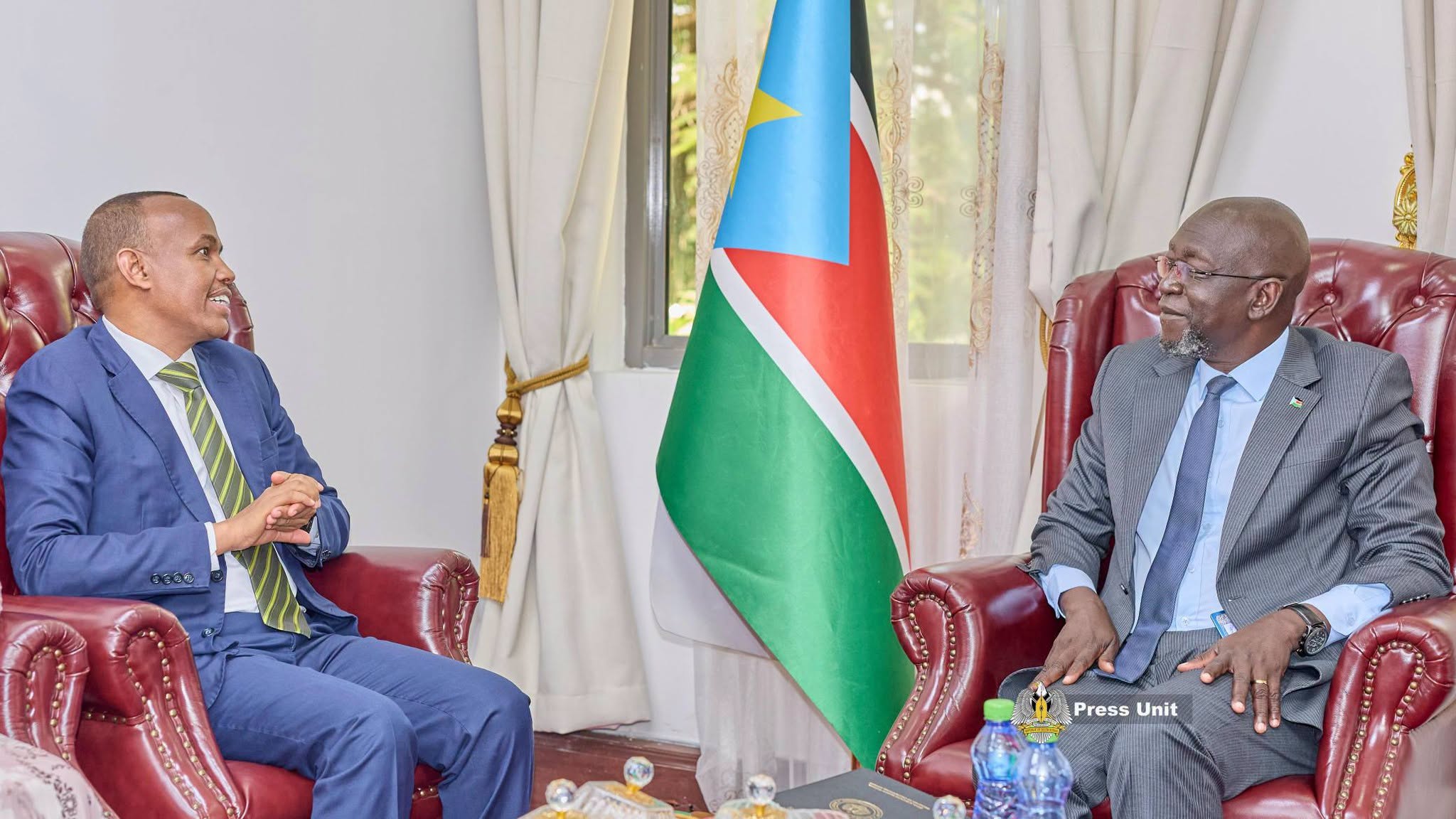
The regional bloc’s commendation followed a meeting in Juba on Tuesday between Minister of Presidential Affairs Africano Mande Gedima and IGAD Special Envoy Ambassador Moussa Djama Ali.
The duo discussed developments in the electoral process and preparations for the upcoming polls, which are scheduled for December 2026.
However, the dialogue has proceeded without the participation of the main opposition group, the Sudan People’s Liberation Movement-in-Opposition (SPLM/A-IO), led by detained former First Vice President Dr Riek Machar.
Other political parties and holdout groups that did not sign the 2018 Revitalised Peace Agreement have also been excluded from the process.
The absence of these groups raises questions about the breadth of political participation in the dialogue and the extent to which its outcomes will reflect the positions of parties outside the process.
South Sudan is preparing to hold its first general elections since gaining independence in 2011, following years of postponements.
The planned December 2026 polls come amid continuing political tensions and disagreements over the implementation of the 2018 Revitalised Agreement on the Resolution of the Conflict in the Republic of South Sudan.
The peace agreement was extended by 24 months to February 2027, while the transitional government has continued preparations for elections.
Key issues surrounding the process include electoral readiness, security arrangements and the political conditions necessary for a credible vote.
The inter-party dialogue in Juba is intended to provide a platform for participating political parties to discuss election-related matters under the theme of peaceful, inclusive, transparent and credible elections.
IGAD has been involved in regional efforts to support peace and political stability in South Sudan. The exclusion of the SPLM/A-IO and other groups, nevertheless, remains a significant point of concern in assessing the inclusivity of the current dialogue.