


123
By William Madouk
South Sudan’s Economic Cluster has ordered an end to cash withdrawal limits imposed by commercial banks, offering hope to thousands of customers who have struggled for months to access their own money.
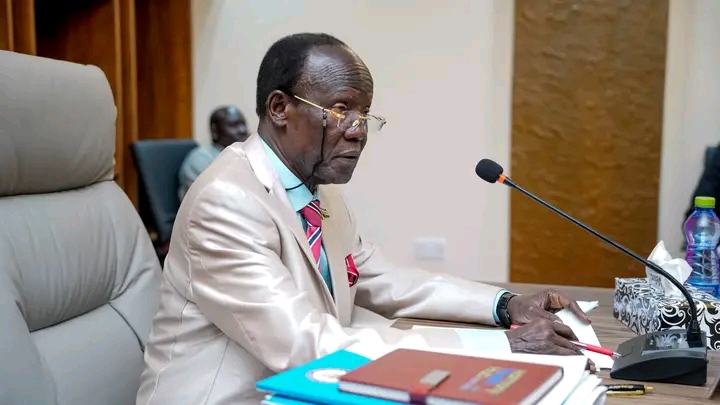
The decision was reached during an ordinary meeting chaired by Vice President and Chairperson of the Economic Cluster, Prof. James Wani Igga, in Juba.
In a statement issued after the meeting, the Economic Cluster said it “resolved to lift restrictions on withdrawal limits imposed on the public by commercial banks.” It noted.
“the Ministry of Finance and Planning and the Central Bank of South Sudan to implement the resolution and develop better strategies to address financial challenges in the country.” Statement added.
The meeting also agreed to implement the Council of Ministers’ resolution on non-statutory tax exemptions.
According to the statement, the cluster considered the exemptions “detrimental to the economy, especially in terms of non-oil revenue collection.”
To strengthen economic reforms, the cluster approved the establishment of an Inter-Agency Economic Reform Task Force, which will be headed by the Ministry of Finance and Planning.
The task force will review all strategies proposed by the Economic Cluster.
Speaking to media after the meeting, the Cluster’s spokesperson and Deputy Minister of Agriculture and Food Security, Lily Albino Akol, said “the resolutions aimed to address financial challenges in the country.”
She added that the resolutions “will be forwarded to the Council of Ministers for further deliberation and approval.”
If approved by the Council of Ministers and implemented, the decision could ease pressure on bank customers who have faced severe cash shortages despite having money in their accounts.
For months, bank customers across the country have endured long queues outside commercial banks, only to be allowed to withdraw as little as SSP 50,000 or SSP 100,000, regardless of how much money they hold in their accounts.
The prolonged cash liquidity crisis has left many questioning the value of keeping their savings in banks, with some turning to cash transactions instead.
The latest measures come as South Sudan continues to grapple with high inflation, a shortage of foreign currency and persistent cash liquidity challenges that have undermined confidence in the country’s banking sector.