


By Guya Scopas Bethuel
The European Union (EU) and South Sudan’s Ministry of Agriculture and Food Security have reaffirmed their commitment to transforming the country’s agricultural sector after convening the third Steering Committee meeting of the Green and Resilient Economy Team Europe Initiative (GRE TEI) in Juba.
The meeting, chaired by the Ministry of Agriculture and Food Security and represented by the Undersecretary, Hon. Dr. Michael Roberto Kenyi Legge, brought together representatives from key government ministries, development partners, co-funding donors, and implementing organizations to review progress, strengthen coordination, and provide strategic direction for the initiative.
The GRE TEI is a multi-partner programme designed to boost agriculture and rural development while improving food and nutrition security, creating jobs, and strengthening the resilience of vulnerable communities across South Sudan.
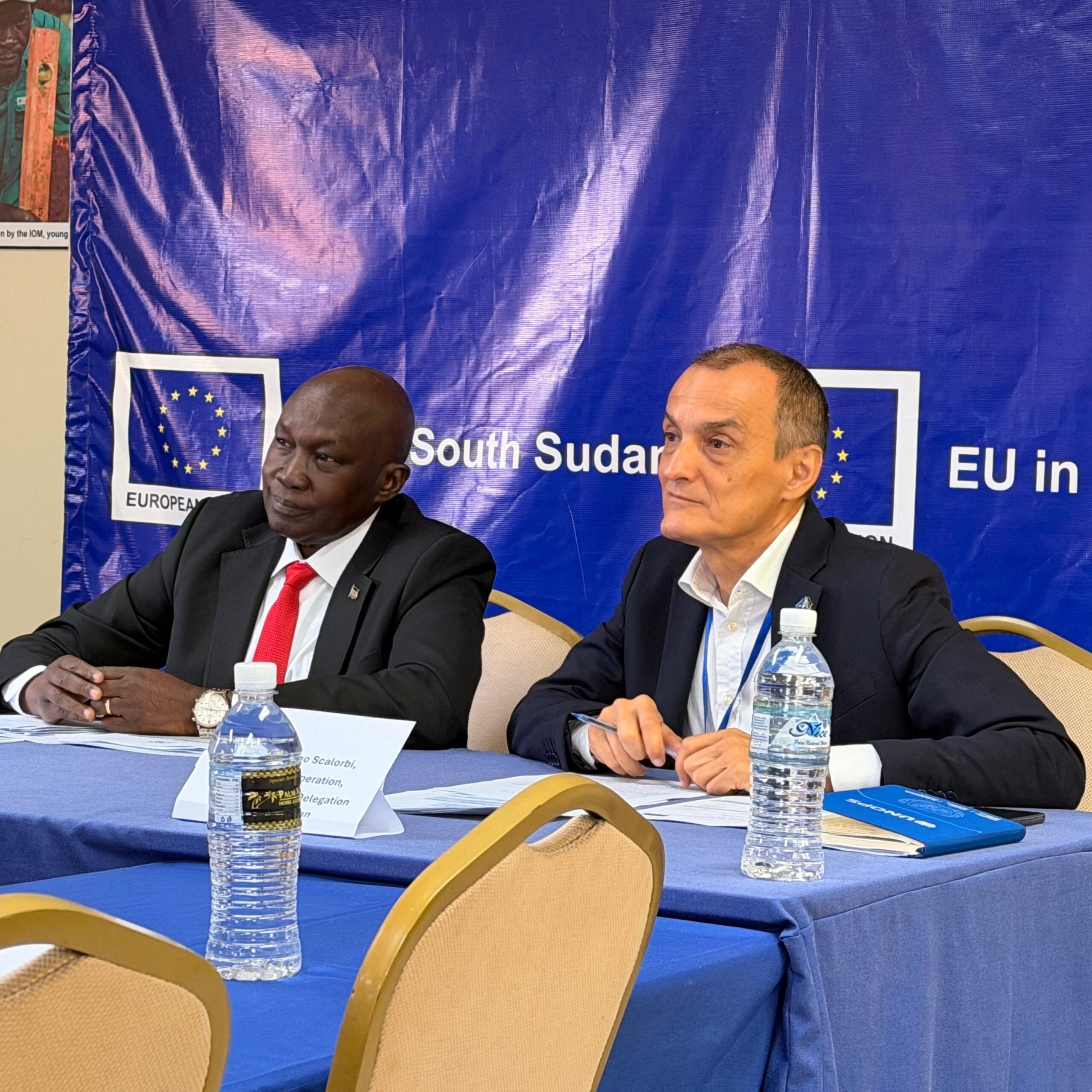
Speaking during the meeting, the Head of Cooperation of the European Union Delegation to South Sudan, Massimo Scalorbi, said the initiative demonstrates the importance of collaboration in addressing the country’s agricultural and development challenges.
“Today’s Steering Committee confirmed the value of working together across institutions and partners to support agriculture, rural livelihoods and food security in South Sudan. Through the Green and Resilient Economy Team Europe Initiative, the European Union and its partners are helping to connect local production, inclusive value chains and sustainable management of natural resources for the benefit of communities across the country,” Scalorbi said.
Hon. Dr. Michael Roberto Kenyi Legge reiterated the government’s commitment to strengthening the policy and legal environment needed to modernize the agricultural sector.
“The Ministry is committed to accelerating the development and implementation of key policies and legal frameworks, which will provide the foundation for long-term agricultural transformation and sustainable food systems,” he said.
Middle FAO South Sudan Representative Mr. Felix Dzvurumi during today’s steering committee meeting (Courtesy: Lagu Francis Apiliga)
The GRE TEI focuses on supporting marginalized communities, including internally displaced persons (IDPs), refugees and returnees, while promoting climate-smart agriculture, sustainable management of natural resources, and stronger rural livelihoods. The programme also aims to expand employment opportunities, particularly for women and young people, by strengthening agricultural value chains and improving access to markets.
The initiative comprises six major projects implemented by international and national partners across several regions of South Sudan. These include the Green and Resilient Agriculture and Climate Economy (GRACE) project, the Community-Driven Rural Development (CDRD) project, the Sustainable Markets and Agribusiness Competitiveness Plus (SMAC+) project, the Strengthening Pathways towards a Green and Resilient Rural Economy project, the Supporting Sustainable Livelihoods and Conservation in the Great Nile Migration Landscape project, and the Green and Resilient Economy Business Incubator (GREBI) project.
Together, the projects are being implemented by organizations including the Food and Agriculture Organization (FAO), World Food Programme (WFP), International Trade Centre (ITC), GIZ, SNV, Caritas, ACTED, Fauna & Flora International (FFI), African Parks Network, and the International Fertilizer Development Center (IFDC), with co-financing from the European Union, Germany, the Netherlands and the Swiss Agency for Development and Cooperation (SDC).
With a total investment of €115.6 million, the programme will run until the end of 2029 and is expected to improve food security, promote climate-resilient economic growth, create employment opportunities, protect natural resources, and strengthen community resilience across South Sudan.
The Review meeting at the European Compound Conference Hall
The half-day Steering Committee meeting was organized around three key thematic areas: agricultural production and productivity, value chain development, and natural resource management and protection. Participants reviewed ongoing interventions, discussed implementation challenges, and agreed on recommendations and action points that will guide the initiative over the next six months.
The Green and Resilient Economy Team Europe Initiative is among the largest coordinated investments in South Sudan’s agricultural sector, reflecting the EU and its partners’ long-term commitment to supporting sustainable development, economic resilience, and food security in the country.