


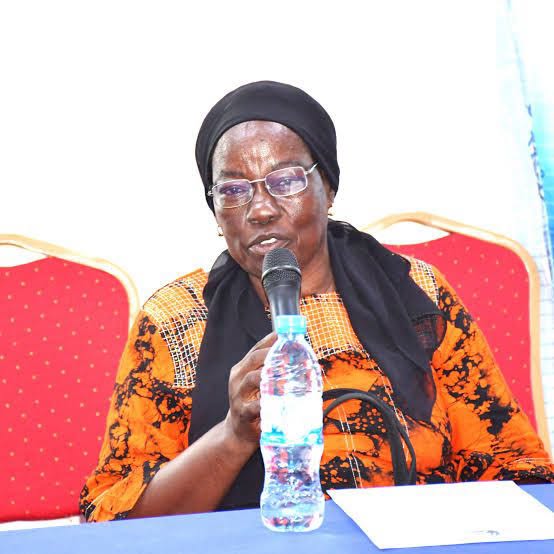
By Guya Scopas Bethuel
The killing of veteran South Sudanese journalist Veronica Lucy Gordon in an ambush along the Lui–Mundri road in Western Equatoria State is a devastating loss to the country’s media fraternity and a painful reminder of the dangers facing those who seek to serve their communities through public life.
Lucy, a respected journalist, media advocate and trailblazer for women’s leadership in South Sudan’s media industry, was reportedly travelling from Lui Payam in Mundri East County to Mundri West town on Thursday night when the vehicle carrying her and other Sudan People’s Liberation Movement (SPLM) delegates came under attack.
She was among party delegates travelling to Mundri West to participate in the SPLM primaries and party congresses. Reports indicate that she was also aspiring for a seat in the National Assembly under the Women’s List.
Her death is particularly tragic because it occurred at a time when she was seeking to extend her contribution to public service beyond journalism and media advocacy through political participation.
The reported attack, which has also left other people dead and several delegates missing, raises serious concerns about the safety of political actors and ordinary citizens participating in the country’s political processes.
A career spanning more than four decades
Lucy’s contribution to South Sudan’s media industry dates back to 1983, when she began her journalism career writing about girls’ education for the Nile Mirror newspaper. At a time when women’s participation in journalism was limited, she chose a profession that would become her lifelong platform for advancing women’s voices and social change.
Between 1985 and 2000, she worked with the Sudan National Broadcasting Corporation, helping develop broadcasting in the country. Her experience and dedication later saw her take on leadership responsibilities within the media sector.
In 2006, she co-founded the Association of Media Women in South Sudan (AMWISS), an organisation established to promote women’s participation, representation and professional advancement in the media industry.
Her appointment as Director at South Sudan Radio in 2012 further demonstrated her professional standing. Two years later, in 2014, she made history by becoming the first woman to serve as Deputy Chairperson of the Association for Media Development in South Sudan (AMDISS).
These achievements were not merely personal milestones. They represented important breakthroughs in an industry where women have historically struggled for equal opportunities, recognition and leadership positions.
Her influence extended beyond newsrooms and broadcasting studios. Through her advocacy, mentorship and professional leadership, Gordon helped create opportunities for younger women to enter journalism, develop their skills and aspire to leadership positions.
In September 2024, her contribution received continental recognition when she was selected among Africa’s 100 Most Influential Women at the African Women Awards, an honour recognising her work in journalism and the advancement of women’s rights.
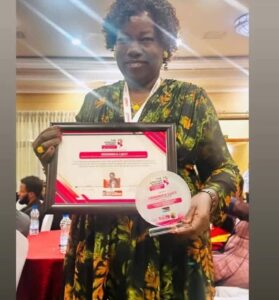
A photo of Veronica Lucy Gordon holding her award upon winning in Addis Ababa (Photo: Courtesy)
From journalism to political participation
Lucy’s decision to participate in the SPLM primaries and seek a seat in the National Legislative Assembly was another expression of her commitment to public service.
Having spent decades using journalism and media advocacy to amplify the voices of women and marginalised communities, her entry into elective politics offered an opportunity to contribute to national decision-making from a different platform.
Her aspiration for a parliamentary seat under the Women’s List was particularly significant in a country where women’s representation in political institutions remains an important component of the broader struggle for gender equality.
Her death therefore represents more than the loss of an experienced journalist. It is also the loss of a woman who was still seeking to expand her contribution to the country’s development and democratic process.
Questions over the safety of political participation
The circumstances surrounding Gordon’s death raise troubling questions about security, particularly as South Sudan moves towards its first general elections, scheduled for December 2026.
According to the Western Equatoria State government, the attack occurred at approximately 7:00 p.m. in Miri Loko village, targeting the last vehicle in a convoy transporting SPLM delegates from Lui Payam to Mundri West after the party primaries.
Lucy and former teacher Justin Akim were reportedly killed at the scene. Two other people sustained gunshot wounds and were taken to Lui Hospital for treatment, while several delegates reportedly went missing after fleeing into nearby bushes. The attackers and their motives remained unknown, according to the caretaker Minister of Information, Noah Issa.
The incident should be a matter of serious concern for political parties, security institutions and the electoral authorities.
Political competition, party primaries and electoral campaigns must never become occasions for fear, intimidation or violence. Citizens and political aspirants must be able to participate freely without putting their lives at risk.
The government has a responsibility to investigate the attack, identify those responsible, and ensure accountability. Equally important is the need to strengthen security along roads and in communities where political activities are taking place.
A legacy that must outlive her
For South Sudan’s media fraternity, Lucy’s death leaves a painful gap, particularly among women journalists who looked up to her as a pioneer and mentor.
Her generation helped lay the foundations of the country’s media industry under difficult circumstances. She witnessed the transformation of journalism from the years before independence, through the liberation struggle, the birth of South Sudan and the challenges of building a national media landscape.
Yet, despite the challenges, she remained committed to the profession and to the advancement of women within it.
Her legacy should not end with tributes and condolence messages. The organisations she helped establish, the journalists she mentored and the institutions she served must continue the work she dedicated her life to.
AMWISS, AMDISS and other media institutions have an opportunity to ensure that her contribution becomes part of a lasting effort to promote women’s leadership, professional development and safety in journalism.
There is also a wider lesson for South Sudan. A country aspiring to democratic governance cannot afford to lose its citizens to violence as they exercise their political rights. The freedom to participate in public affairs, whether through journalism, political organisation or seeking elective office, must be protected.
Veronica Lucy Gordon spent more than four decades giving women a voice in a profession where their voices were often marginalised. She broke barriers, mentored others and demonstrated that journalism could be a powerful instrument for social transformation.
Her life was a story of courage, professional commitment and service. Her death is a national loss.
South Sudan has lost a pioneering journalist, a champion of women’s advancement, and a woman who was not finished serving her country. May her legacy inspire the next generation of women journalists and leaders.