


By Matik Kueth
On Monday, the Ceasefire and Transitional Security Arrangements Monitoring and Verification Mechanism (CTSAMVM), warned that South Sudan’s fragile peace remains under serious pressure, citing continued attacks on civilians, abductions, forced recruitment and restrictions on humanitarian operations as major challenges to the implementation of the revitalized peace agreement.
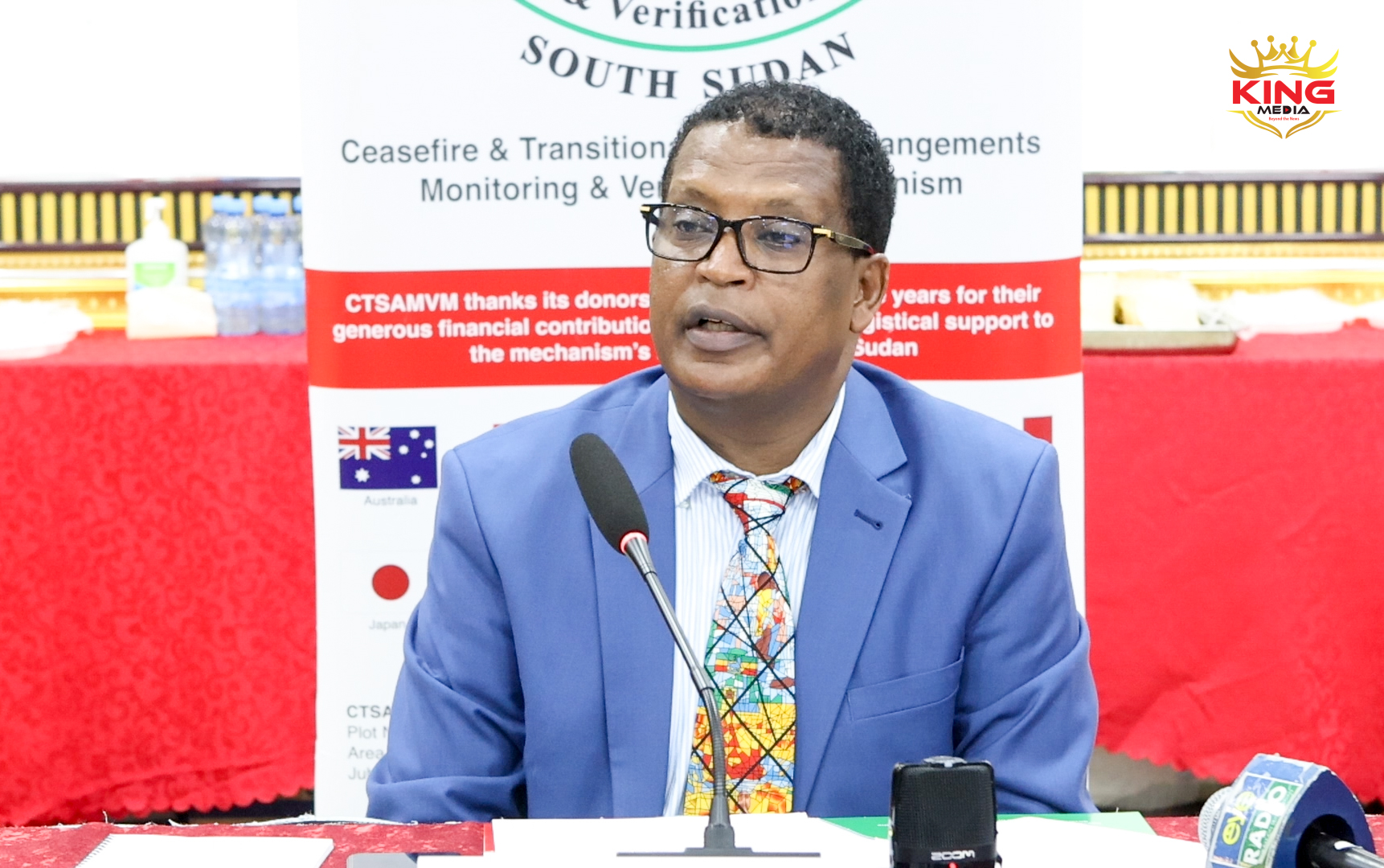
Speaking at the 59th CTSAMVM Board Meeting in Juba, Maj. Gen. Hailu Endashaw Atomsa, CTSAMVM’s Chairperson, said the security situation remains unpredictable despite a decline in major military confrontations.
His remarks came less than a week after unidentified armed men ambushed a joint UNMISS patrol travelling to Pajut in Jonglei State on August 24th, killing two Ethiopian peacekeepers and injuring seven others, including three peacekeepers, two South Sudanese police officers and two civilian staff.
Though UNMISS has called for a prompt investigation and accountability, Atomsa condemned the attack, describing such violence as unacceptable and warning that it undermines collective peacebuilding efforts.
“The security environment across South Sudan remains unpredictable. While major military confrontations declined during the reporting period, localized insecurity including threats against civilians, forced abduction and recruitment, intercommunal tensions, cattle-related violence, restriction on humanitarian access, and threats to humanitarian personnel continue to present significant challenges,” Maj. Gen. Atomsa.
He noted that the security situation remains particularly volatile in Greater Upper Nile and Jonglei, where reports of attacks against civilians, intercommunal violence, armed clashes, ambushes and disruption of humanitarian activities continue.
Atomsa highlighted deteriorating security conditions in parts of Greater Equatoria, including reported abductions and allegations of forced recruitment, while parts of Greater Bahr el-Ghazal have experienced localized violence and intercommunal tensions.
He cited a reported attack on communities in Tonj North County, Warrap State, on August 9th, allegedly involving armed youths from Mayom County in Unity State, which resulted in civilian casualties.
The CTSAMVM assessment comes as the mechanism continues to investigate alleged violations of the Permanent Ceasefire and Transitional Security Arrangements.
The chairperson urged all parties to respect the permanent ceasefire and cooperate with monitoring teams by allowing access to areas where alleged violations have occurred.
“The deployment reminds us that the permanent ceasefire extends beyond preventing large-scale hostilities. It is equally about protecting civilians, preserving humanitarian access, and building confidence among the parties and the communities they serve,” he stated.
The peace monitoring body has continued deploying Monitoring and Verification Teams across conflict-affected areas.
In August, teams conducted missions to Yei in Central Equatoria, Mandek in Nasir County, Lankien in Nyirol County and Rumbek in Lakes State to investigate reported abductions, killings and allegations of forced recruitment.
Atomsa called on the transitional government to strengthen civilian protection, particularly along high-risk routes and in conflict-prone areas, while improving early-warning systems and preventive responses.
He further appealed to all signatories of the peace agreement to stop abductions, forced recruitment and attacks on civilians and to ensure the safety of humanitarian personnel and their assets.
“All parties to the R-ARCSS are urged to refrain from abduction, forced recruitment, attacks against civilians and any actions that impede humanitarian operations. This includes ensuring the protection of humanitarian personnel, assets and relief supplies in accordance with the Permanent Ceasefire and the provision of the Peace Agreement,” he stressed.
He reaffirmed CTSAMVM’s commitment to working with relevant stakeholders and operational partners to monitor and verify the implementation of the peace agreement.